Why do people make it a point to reply to a text while they are driving?
If there is a chance of taking someone else’s life due to distracted driving….why do people still do this every day?
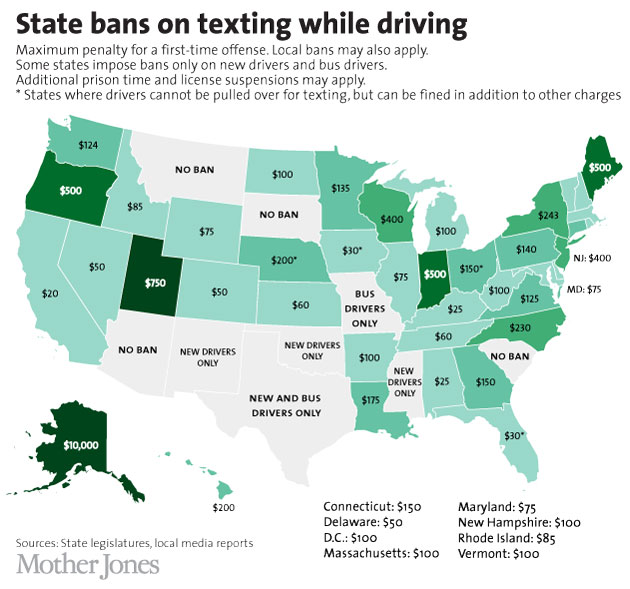
Texting while driving is very distracting and should not be done. The dangers of texting while operating a vehicle are serious. One of the biggest reasons why people just cannot seem to put their phone’s down is because they think that they defy the odds. Luckily the United States has been making some changes to help stop this. Below is a photo of the new law fines that the government has enforced.
Unfortunately, crashes happen daily and at every moment. Even if you are not texting and driving, someone else could be…so why do people still do it?
As I’ve gotten older, I’ve realized that everyone is always on their phone. I’ve even seen people run into doors and street signs because they are so sucked into what is pulled up on their cell phone. I have never been one to get sucked into technology, and for that I am thankful. Unfortunately, people from driving age and older use their cell phones while they drive.
I personally do not understand why anyone would put their life or someone else’s life in jeopardy by answering a text or a phone call. Some people think that they cannot possibly become a statistic of accidents while distracted driving.
I have been interested in writing about this topic because I have seen first hand what distracted driving can do to someone and others involved.
Why do people text and drive? People text and drive because they do not have the patience to wait to reply until they are stopped, generally, this is due to them not wanting to forget to text that person back, so they just want to go ahead and get it over with.
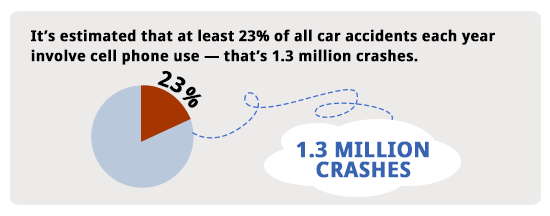
Above is a photo demonstrating the percentage of crashes due to using a cell phone.
Research shows that there have been several motor vehicle accidents due to texting and driving. There have been many commercials, several signs, and even new laws that prohibit the use of a cell phone while operating a motor vehicle.
According to David Crundall, “Texting and driving also appears to be a significant problem, especially among younger drivers (“generation-text”). Studies conducted in both simulators and in the real world have shown that drivers on a mobile phone reduce their visual scanning of the road ahead, are more likely to weave within their lane on bends and are slower to respond to hazards”.
Currently, cell phone usage is very common. This is how people communicate, and it is almost unheard of to not to own a cell phone. People of all ages obtain cell phones. Cell phones allow surfing of the web, give quick access to questions one may have, give one the ability to communicate via text or social media platforms, and use apps like GPS or Uber eats. Although cell phones are convenient, there are still many risks that are a factor when using them.
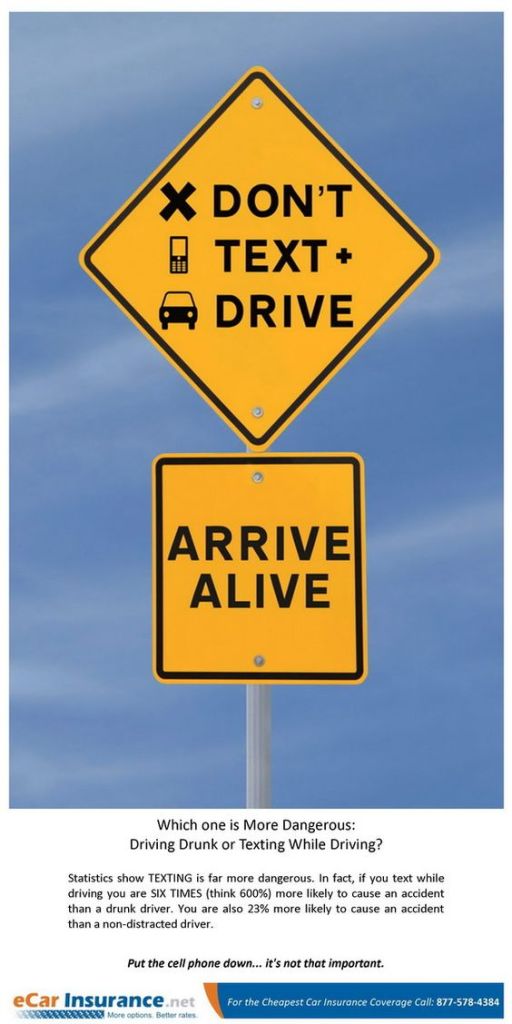
“Sending or reading a text takes your eyes off the road for 5 seconds. At 55 mph, that’s like driving the length of an entire football field with your eyes closed.” (NHTSA, 2018)
link here
Can the government stop people from texting and driving?
“The number of drivers who’ve had a distraction-related incident—from a close call to a full accident—remains terrifyingly high. Laws can’t do much in those moments when a seconds-long glance at a phone can result in a fatality.”
See here for further details
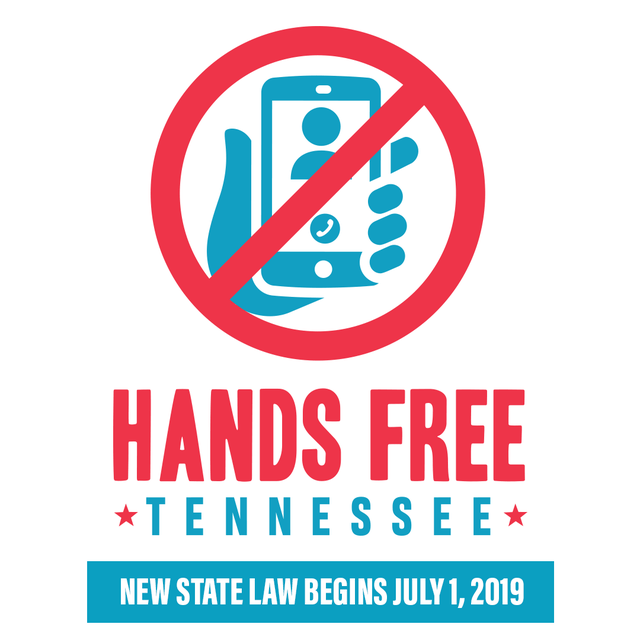
Tennessee is the 19th state to ban cellphone use while driving. The bill excludes law enforcement, first respondents and utility workers and others using a phone to make an emergency call.
“Our brains do such a good job making us feel like we’re in charge that we don’t realize it’s all an illusion until it’s too late. If our hearts started racing as soon as our attention started to drift, we might be more inclined to stay focused.”
A better glimpse at this here
So what exactly can we do to help fix this? After all, we are only responsible for our own actions. I think we can find different ways to keep our phones put away and our eyes on the road to practice safer driving.
Throw that phone in the glove box or leave it in your purse (if you have one). Hold yourself liable before someone else can. Just because your significant other is blowing up your phone about dinner, or your mom is texting you about how to use her new instant-pot, that doesn’t mean you need to put yourself or others in danger.
Ask your friends and family to call you if it is an emergency, otherwise just get to your destination safely. If you feel like it is important and you need to reply then just pull over, they make shoulders for that!
 texting and driving